Sunday, September 9, 2012

the rating game

I have wanted to attach a rating to books for some time.  Now that there are a dozen of unreviewed books on the shelf, I think they provide a perfect opportunity to do this.  It seems easier to do the rating with the books all laid out together for comparison purposes rather than rate each book in isolation.

So here goes; scale of five with five stars as the perfect score.

Drum roll please….


4.5 stars


1.       State of Wonder by Ann Patchet (2011)
4 stars
 
Anders Eckman was reported dead after being sent by Vogel, his employer pharmaceutical company, to follow up on the progress of Dr. Annick Swanson.  Nothing has been heard from Swanson for more than two years while working on a valuable drug. Dr. Marina Singh, co-worker of Eckman and former student of Dr. Swanson, was thereafter sent by Vogel with the hope that she’ll succeed where Eckman has failed.   

The book raises a lot of ethical considerations on drug research, development, and marketing. 

This is my fourth book by Patchet [Bel Canto (2001); The Magician’s Assistant (1997); and Patron Saint of Liars (1992)] and it did not disappoint.  Patchet, as usual, is able to weave a mesmerizing story that is able to transport the reader right into where the heart of the action is.  
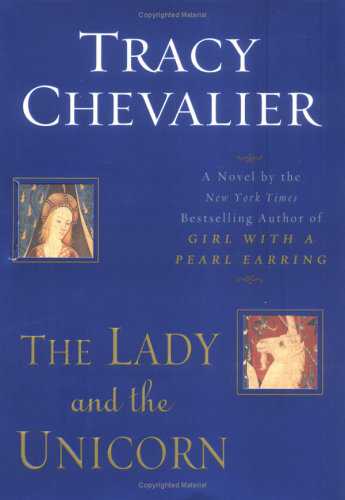
     
      3. The Lady and the Unicorn by Tracy Chevalier (2004)
4 stars

Chevalier, author of the Girl with a Peal Earing, comes up with the story behind the Lady and the Unicorn tapestries which Chevalier dates to have been made in 1490. The book is told from the point of view of the different characters – Nicolas des Innocentes, who conceptualized the theme of the tapestries; the Le Viste family (Claude Le Viste and Genevieve De Nanterre) who commissioned the work; and the weavers from Brussels who executed the design (Georges de la Chapelle, Christine du Sablon, Philippine de la Tour, Alienor de la Chapelle). Interestingly, we don’t hear the first person point of view of Jean Le Viste, master of the Le Viste household.

Beautiful book which aside from spinning a colorful tale, gives insights on the mores of 15h century Paris and Brussels.
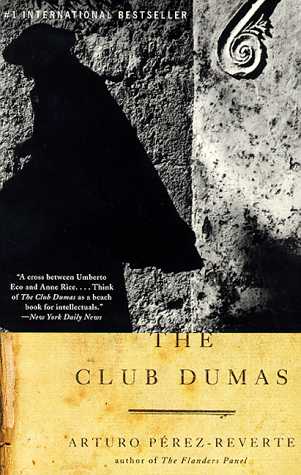


4.       The Club Dumas by Arturo Perez-Reverte (1998)
4 stars

Lucas Corso, a person one might call a book detective, has been given the assignment of authenticating a fragment of Alexandre Dumas’ The Three Musketeers. Little does he know that this seemingly simple assignment would turn out to be related to a highly complex plot involving murders and characters thrown in his way such that he starts feeling he has been drawn in right into the heart of the Three Musketeers story.

I think this is how a spy/adventure/thriller should be written. Highly intelligent, replete with historical and literary trivia, and full of witty conversations throughout.


5.       Divisadero by Michael Ondaatje (2007)
4 stars

Ondaatje, author of The English Patient, comes up again with a riveting saga, this time, involving three children, Ann, Claire, and Coop in Northern California in the 1970s. The book follows what happens to all three children when they got separated after Ann and Claire’s father finds out about Ann and Coop’s teenage affair.

Ondaatje has to take care that he does not keep repeating himself in his future books. Several characters In Divisadero sounded very similar to those from The English Patient. All in all though, Divisadero is a good follow-up work to The English Patient and does not disappoint.

6.       The Piano by Jane Campion and Kate Pullinger (1994) 
3.75 stars

No, I have not watched the movie and I was surprised at how dark and violent this book was that it gave me a whole sleepless night.

Allow me to quote from the dust cover: “Ada McGrath, her nine-year old daughter, and her piano arrive to an arranged marriage in the remote bush of 19th century New Zealand.  Stewart, her husband, refuses to transport the piano, and it is left behind on the beach.  Unable to bear its destruction, Ada strikes a bargain with Baines, an illiterate tattooed neighbor.  She may earn her piano back if she allows him to do certain things while she plays; one black key for every lesson.”

The Piano has the texture of Bronte and D.H. Lawrence and I was torn whether to give this book 4 stars. But the graphic horror of Stewart axing Ada’s finger and sending Ada’s daughter to Baines (with the axed finger!) to tell him that if he does not keep away from his wife, there will be more fingers coming, just left a bad taste in my mouth.

 7.       Life Studies by Susan Vreeland (2005)
3.5 stars

The book is a compilation of short stories which can be divided into two main parts.  The first part is composed of stories of people who had brushes with Renoir, Manet, Monet, Van Gogh, Modigliani, and Morisot. The second part is a compilation of contemporary stories of how art has seeped into the lives of people.

I think Life Studies would have been much better if it were actually two books instead of the two parts squeezed in one work. It gives the feeling that the author rushed the publication of the book.


8.       With Violets by Elizabeth Robards (1964)
3 stars
"With Violets" is a historical fiction set in the 1860s involving Berthe Morisot, one of the movers of Impressionism, and Edouard  Manet.
My main gripe with this book: Morisot is a highly intelligent and accomplished artist and she was reduced into a one-dimensional simpering love-sick fool in “With Violets”. I think Robarbs did her a big injustice.


      9.       I Don’t Know How She Does  It by Allison Pearson (2002)
3 stars

Kate Reddy is a British hedge-fund manager, wife, and the mother of two toddlers. She is on the verge of a nervous breakdown trying to be the perfect career woman and the perfect mother.

This one of those hysterical books which do not help in clearing age-old issues; rather, it just manages to add kindle to the bonfire. My two-cents worth: Family life is team work. If Reddy wants to become superwoman by sidelining her spouse and pretending at work that having two toddlers has not changed her life a bit, fine. But please, no more books on this addled concept. There are those out there trying to improve legislation on working conditions of working mothers and giving equal opportunities  to both genders.

And making a movie of this book with Sarah Jessica Parker on the lead role just aggravated the matter.


10.   The Reluctant Queen by Joan Wolf (2011)
2.5 stars

Story based on the biblical Esther. While interesting how Wolf filled out the details, overall, the book is one sappy read.


      11. The Weekend by Bernard Schlink (2010)
2 stars

Schlink, writer of “The Reader” sets again this story in post-war Germany.  Jorg, imprisoned for 24 years has been pardoned.  His sister has asked close friends for the weekend to welcome him home.

I don’t know about you. But this weekend with Jorge did not feel like two days but closer to the 24 years he spent in prison.  The story just dragged on and on and I, together with his guests, heaved a sigh of relief when the weekend was over.


12.   Please Look After Mother by Kyung-Sook Shin (2011)
1 star

So-Nyo, wife and mother of five-grown up children, got lost en-route from her small town to Seoul with her husband. What follows is a series of finger-pointing and guilt-tripping among the children while they search for their mother. While I get the point of the unacknowledged and taken for granted mother, I don’t get the point of the tedious story all throughout told from the perspective of So-Nyo and the children.  Kyung-Sook Shin was not able to give a distinct voice to the characters and the technique has fallen flat.

The cover of this book says that Please Look After Mother purportedly sold a million copy. Did I miss anything here?

Predictably Irrational by Dan Ariely (2009)

Ariely discusses the systematic (as opposed to random) irrational behavior of people and how they tend to repeat them. He draws deeply from the field of Behavioral Economics, an amalgamation of both Psychology and Economics.

 Here are the interesting topics Ariely tackled in the book:

1.  Truth About Relativity (why everything is relative; even when it shouldn’t be)
2. The Fallacy of Supply and Demand (why the price of pearls – and everything else – is up in the air
3. The Cost of Zero Cost (why we often pay too much when we pay nothing)
4. The Cost of Social Norms (why we are happy to do things, but not when we are paid to do them)
5. The Power of a Free Cookie (how free can make us less selfish)
6. The Influence of Arousal (why hot is much hotter than we realize)
7. The Problem of Procrastination and Self-Control (why we can’t make ourselves do what we want to do)
8. The High Price of Ownership (why we overvalue what we have)
9. Keeping Doors Open (why options distract us from our main objective)
10. The Effect of Expectations (why the mind gets what it expects)
11. The Power of Price (why a 50-cent aspirin can do what a penny aspirin can’t)
12. The Cycle of Distrust (why we don’t believe what marketers tell us)
13. The Context of our Character (why we are dishonest and what we can do about it; why dealing with cash makes us more honest)
14. Beer and Free Lunches (what is Behavioral Economics and where are the free lunches)

As opposed to Malcolm Gladwell who presents research to back up his hypothesis, Ariely conducts experiments to prove a point.  Ariely writes, “If the lessons learned in any experiment were limited to the exact environment of the experiment, their value would be limited.  Instead, I would like you to think about experiments as an illustration of a general principle, providing insight into how we think and how we make decisions – not only in the context of a particular experiment but, by extrapolation, in many contexts of life.”

Which brings me to my perceived weakness of this book. The experiments were generally conducted in specific environments, i.e., ivy league universities, which make extrapolation highly suspect. I would have liked Ariely to conduct the same experiment with people of different cultural backgrounds, age groups, and income brackets before pronouncing his conclusions. But of course if Ariely did this, he would have ended up with a technical paper and not a reader-friendly 348-page work.

The value of this book is essentially that it points out the irrational and costly decisions people make and what they can do about this. Ariely and Behavior Economics notwithstanding, I don’t think I will be boycotting Starbucks anytime soon though.

Thursday, September 6, 2012

The Outliers by Malcolm Gladwell (2008)

I first read this book in January 2009 en route to Adelaide. I decided to read it again recently to refresh my memory on Gladwell’s theory of why certain individuals stand out from the crowd. His hypothesis?

“People don’t rise from nothing.  We do owe something to parentage and patronage.  The people who stand before kings may look like they did it all by themselves.  But in fact they are invariably the beneficiaries of hidden advantages and extraordinary opportunities and cultural legacies that allow them to learn and work hard and make sense of the world in ways others cannot.  It makes a difference where and when we grew up.  The culture we belong to and the legacies passed down by our forebears shape the patterns of our achievement in ways we cannot begin to imagine. It’s not enough to ask what successful people are like, in other words.  It is only by asking where they are from that we can unravel the logic behind who succeeds and who doesn’t.”

The first part of the book tries to show that success arises out of the steady accumulation of advantages: when and where you were born, what your parents did for a living, and that the circumstances of your upbringing make a significant difference in how well you do in the world.  The second part discusses that the traditions and attitudes we inherit from our forebears play the same role. 

Interesting insights from the book:
  1. 10,000 hours of practice is required to achieve the level of mastery associated with being a world class expert – in anything.
  2. Success is the result of what sociologists call “accumulative advantage”.
  3. The sense of possibility so necessary for success comes not just from inside us or from our parents.  It comes from our time: from the particular opportunities that our particular place in history presents us with.
  4. What truly distinguishes the histories of outliers is not their extraordinary talent but their extraordinary opportunities.
  5. Intellect and achievement are far from perfectly correlated. Intelligence matters only up to a point, then past that point, other things (things that have nothing to do with intelligence) must start to matter more.
  6. Concerted cultivation has enormous advantages. Heavily scheduled middle-class children are exposed to constantly shifting experiences and learn a sense of “entitlement”.
  7. All of the advantages that wealthy students have over poor students is the result of differences in the way privileged kids learn while they are not in school.
  8. Most people agree that autonomy, complexity, and a connection between effort and reward are three qualities that work has to have if it is to be satisfying.
  9. If you work hard enough and assert yourself, and use your mind and your imagination, you can shape the world to your desires.
  10. No one who can rise before dawn 360 days a year fails to make his family rich.
Gladwell concludes with this statement: To build a better world we need to replace the patchwork of lucky breaks and arbitrary advantages that today determine success – the fortunate birth dates and the happy accidents of history – with a society that provides opportunities for all.

While I highly recommend this book, I still think that one must take it with a grain of salt.  I am sure that one can cite at least 10 cases to disprove Gladwell’s theory about Bill Gates, the Beatles, or Christopher Langan.  Gladwell builds a good case though and it will take one really good researcher/highly entertaining writer to convince me otherwise.

Especially that part on the 10,000 hours of practice to build a world-class level of expertise (the Little Pebble just gave me a good kick. I think the poor dear is starting to realize the enormity of 10,000 hours).

Thursday, August 30, 2012

Here on Earth by Alice Hoffman (1997)

The plot of “Here on Earth” closely follows that of Emily Bronte’s “Wuthering Heights”:  Boy with a dark, mysterious past is adopted by the Man-of-the-House; Daughter of the Man-of-the House and the Dark Boy get into some cosmic-defying relations; Son of the Man-of-the House hates the Dark Boy with venom that consumes him; Man-of-the-House dies leaving his progeny scattered to the winds to fend for themselves; the characters all meet again sometime in the future to torture each other once again; and these characters have brought forth sons and daughters fated to replicate their parents’ dark stories.

The main problem with “Here on Earth” is that one cannot avoid comparing it to Wuthering Heights. Hoffman’s Hollis manages to merely look like a deranged, cruel man who physically and psychologically abuses women and children as opposed to Bronte’s Heathcliff who somehow is able to elicit sympathy notwithstanding all the darkness surrounding him.  Hoffman’s March feels inconsequential and flimsy compared to Bronte’s fiery Catherine who was a force to reckon with. Hoffman was not able to fully develop certain of her characters and to explain their purpose in the story (What was that triangulation of Mr. and Mrs. Justice and the deceased Judith Dale all about?). Whereas Bronte was able to elevate the relationship between Heathcliff and Catherine to something almost spiritual, Hollis and March are nothing more than irresponsible, selfish, unthinking individuals.

“Here on Earth” is much more graphic, especially the sex and violence scenes, but is still unable to reach that level of pathos, darkness, and malignancy that “Wuthering Heights” was able to achieve.

Or perhaps this is none of Hoffman’s fault. As Wuthering Heights has always been one of my favorites, any writer who attempts to scale the heights reached by Bronte’s opus will feebly fall short of my estimation.

Monday, August 27, 2012

The Perks of Being A Wallflower by Stephen Chbosky (1999)


“He’s a wallflower.”
“You see things.  You keep quiet about them. And you understand.”

Stephen Chbosky’s first novel is able to credibly give voice to a 15-year old, precocious, socially awkward young boy named Charlie that you’d start thinking that Chbosky himself invented letter-writing in novels to tell a story.

“The Perks of Being A Wallflower” is a series of letters written by Charlie in an attempt to explain and figure things for himself.  The recipient of these letters is unaware as to who Charlie is as there is no return address indicated. Charlie just “needs to know that someone out there listens and understands and doesn’t try to sleep with people even if they could have”. 

You will want to hug this boy and tell him everything will be all right as he pours his heart out letter after letter recounting his first year in high school.  He grapples with issues of girls, dating, friendships, family life, honesty/dishonesty, smoking, teenage sex, and drugs.  He probably thinks at some point that it is easier to get straight As compared to putting himself out there to “participate”.

Charlie’s teachers know that the boy is special.  In fact, Bill, one of his teachers, has been giving him extra reading assignments on top of his regular work load (On the Road, Naked Lunch, The Stranger, This Side of Paradise, Peter Pan, A Separate Peace, To Kill a Mockingbird, Hamlet, Catcher in the Rye, The Great Gatsby, Hamlet, Walden, and The Fountainhead).

“The Perks of Being A Wallflower” is not only about teenage angst but also touches upon seriously sensitive issues of teenage suicide and child abuse without turning the book into one big horror show.

The book, painfully poignant in some parts and funny in others, manages to convey the message that notwithstanding teenage turbulent years, young people will be able to come out of this tunnel with the guidance of family, help from persons in authority, company of good friends, and even look back at those years and say, “And in that moment, I swear we were infinite.”

POSTSCRIPT: A movie of the book is in the making. While I adored Emma Watson in the Harry Potter series, I think she's miscast as Sam in “The Perks of Being A Wallflower”.


Saturday, August 25, 2012

a kindle is making my heart go tingle...


I have capitulated.

I have decided to give e-books a chance for several reasons:

1. I have been moving again and packing up more than two decades of accumulated books is no joke (ask the haulers).

2. I have tried out a colleague's Kindle and I was amazed at how light it was, how similar in size to a regular pocketbook, and how its resolution is so close to that of a paper-printed page.

3. (I think) it could cut down my book expense. Most classics are now downloadable and new writers are striking it out in the web waiting for publishers to get to them.

4. I don't need to wait for the local bookstores to come out with the works of my favorite authors (I never  attempted to take that marshmallow test; I already know the result).

5. I can still read in bed.

6. My entire library can fit in my purse.

7. I need to be prepared for the Little Pebble. I have observed that more and more schools are now  using tablets in lieu of textbooks. I wouldn't want my child to classify me together with the dinosaurs nor include me in discussions of Darwin's survival of the species or the Big Bang theory.

Tuesday, August 21, 2012

The Invention of Everything Else by Samantha Hunt (2008)


Is it not amazing how certain writers are able to come up with a believable and vastly entertaining story involving persons who have actually lived (Nikola Tesla, Mark Twain, Thomas Edison, George Westinghouse), much-retold sci-fi and still manage to give these a fresh spin (time travel and Martians!), a talking animal (a certain pigeon at the Bryant Park), a sappy love story (Louisa from the present and Arthur from the future), an undying declaration of love (Walter and his affection for his wife Freddie who has passed away more than two decades ago), and a long-standing friendship (Walter and Azor)?

The book opens with introspections of Tesla in his old age. Gradually, Hunt introduces her other characters one at a time and they at some point, manage to connect their personal histories with that of Tesla’s.

We get to know Tesla better – his childhood in Serbia, his eccentricities, his aversion to company, the myriad inventions in his head, his frustrations at how several of his ideas failed to come to pass for lack of financial support, his antipathy toward Edison and Marconi who he believed stole his ideas, and his decline towards senility when in his eighties he has started talking to pigeons and to Samuel Clemens (Mark Twain) who has long been dead. In his old age, Tesla would also suffer from his dire financial position and political persecution.

Hunt is an absolutely clever novelist who can teach writers like Audrey Niffenegger a thing or two on how to come up a tale wherein readers tacitly agree to suspend their disbelief instead of sniggering over the sheer ridiculousness of the tall tale.